Recommended





The picture is from Forbes , the copyright belongs to the original author
Artificial intelligence (AI) has entered the fitness landscape with remarkable precision, helping people manage their weight with data-driven accuracy. From personalized meal recommendations to predictive insights about metabolism and exercise efficiency, AI health assistants have become indispensable tools in achieving sustainable fitness goals.
1. Understanding the Foundation of Weight Management
Weight management, at its core, revolves around a simple equation: balancing calorie intake and energy expenditure. Yet in practice, achieving and maintaining an ideal weight is far more complex. Metabolism rates vary among individuals, as do responses to diet, exercise, stress, and sleep. Traditional methods—manual calorie counting or generalized diet plans—often fail to capture these nuances.
AI changes that equation by introducing precision. Instead of applying a one-size-fits-all model, AI analyzes real-time data from wearables, nutrition logs, and biometrics to create personalized strategies. It bridges the gap between general recommendations and individual realities.
2. The Role of Data in Personalized Weight Management
The precision of AI-assisted weight management depends on data—lots of it. Modern health devices such as smartwatches, fitness trackers, and connected scales continuously collect information on heart rate, sleep quality, activity levels, and even blood oxygen levels. Food tracking apps and digital meal scanners further enrich this data by recording macronutrient intake.
AI systems synthesize these diverse inputs into a unified profile. For example:
Activity Tracking: Steps taken, intensity of workouts, and heart rate variability reveal daily energy expenditure.
Nutritional Data: Logging meals enables AI to understand calorie intake, nutrient balance, and eating patterns.
Biometric Indicators: Weight fluctuations, body fat percentage, and hydration levels help monitor physical responses.
This multi-dimensional dataset allows AI to learn from an individual’s habits and make increasingly accurate predictions about what works best for their body.
3. Personalized Calorie and Nutrition Recommendations
One of the earliest and most effective uses of AI in weight management lies in calorie and nutrition planning. Traditional calorie tracking apps often rely on manual input and static formulas, such as the Harris-Benedict equation for basal metabolic rate. However, AI-driven platforms like MyFitnessPal, Noom, and newer intelligent assistants employ adaptive learning models.
These models adjust recommendations dynamically based on progress and behavioral feedback. For instance, if an individual consistently falls short of their calorie targets or reports hunger between meals, the AI recalibrates meal plans to include higher satiety foods. Similarly, if weight loss plateaus, the system can analyze potential causes—such as underreporting food intake or reduced non-exercise activity—and suggest evidence-based adjustments.
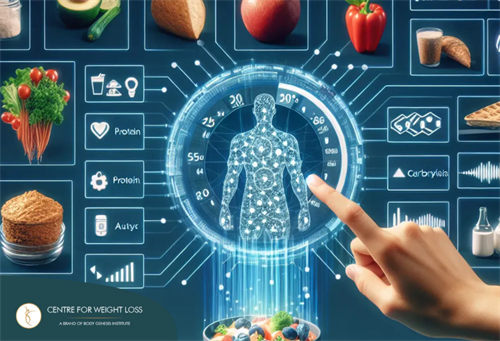
Moreover, AI nutrition assistants can recognize food items through image recognition and natural language processing. A user can simply take a photo of their meal, and the assistant estimates portion size and nutritional breakdown in seconds. This convenience minimizes user friction and improves long-term adherence—an essential factor for sustainable weight control.
The picture is from CENTRE FOR WEIGHT LOSS , the copyright belongs to the original author
4. Metabolic Adaptation and Predictive Insights
Human metabolism is adaptive—it responds to caloric restriction, exercise intensity, and even emotional stress. This metabolic flexibility often complicates long-term weight management. As people lose weight, their metabolism tends to slow, reducing the rate of calorie burn. AI excels in anticipating these physiological adaptations.
Through continuous data monitoring, AI systems detect subtle metabolic shifts. For example, a decrease in resting heart rate, reduced physical activity energy expenditure, or slower weight loss progression might indicate metabolic adaptation. The AI can respond by recommending structured refeed days, progressive resistance training, or dietary adjustments to re-stimulate metabolism.
Some advanced AI health assistants integrate genetic and microbiome data to predict metabolic efficiency and nutrient utilization. These predictive capabilities mark a new era of precision nutrition, where interventions are designed not just for weight loss but for optimal metabolic health.
5. Exercise Optimization Through Machine Learning
Exercise remains a cornerstone of weight management, but its effectiveness varies greatly between individuals. AI-driven platforms like Fitbit Coach, Freeletics, and Apple Fitness+ use machine learning algorithms to tailor exercise plans in real time.
Instead of static routines, these systems adapt based on biometric feedback. If a user’s heart rate recovery indicates insufficient recovery or excessive fatigue, the AI adjusts the next session’s intensity. Conversely, if progress metrics show improved endurance or strength, the AI gradually increases difficulty.
This adaptive training model ensures that workouts remain challenging yet safe—a balance that prevents burnout and injury. Furthermore, AI can analyze motion data to correct form, count repetitions, and even detect inefficiencies in movement patterns. Over time, this feedback loop leads to better performance and more effective calorie expenditure.
6. Behavioral Coaching and Psychological Support
Weight management isn’t solely a physical process—it’s deeply psychological. Emotional eating, stress, and motivation all play significant roles in determining outcomes. AI assistants equipped with natural language processing and sentiment analysis can act as virtual coaches, providing emotional support and behavioral insights.
For instance, if a user logs late-night snacking or frequently skips workouts, the AI might detect patterns linked to stress or lack of sleep. It can then suggest mindfulness exercises, sleep hygiene improvements, or cognitive-behavioral strategies to address underlying causes.
Some platforms, like Noom and Lark, integrate conversational AI to maintain human-like interactions. These “digital coaches” engage users in empathetic dialogue, celebrate progress, and reinforce positive habits. This behavioral layer transforms AI from a passive tracker into an active partner in personal growth.
7. Continuous Monitoring and Real-Time Feedback
One of AI’s greatest strengths is its ability to operate continuously without fatigue. Unlike human trainers or dietitians, AI assistants monitor 24/7, offering feedback at the moment it’s most relevant.
For example, wearable-integrated systems can detect prolonged inactivity and suggest short movement breaks. If meal timing patterns show irregularity, AI can nudge users toward more consistent schedules that align with circadian rhythms. Over time, these small but consistent interventions accumulate into significant lifestyle improvements.
Real-time insights also help users make informed choices. Before ordering food at a restaurant, one can consult their AI assistant to estimate the meal’s calorie content and how it fits into daily goals. This immediate, context-aware feedback empowers users to make better decisions—turning awareness into action.
8. Integration with Broader Health Ecosystems
AI health assistants are no longer isolated tools; they are part of interconnected wellness ecosystems. Integration with healthcare providers, digital pharmacies, and laboratory services allows for holistic health management.
For individuals managing chronic conditions such as diabetes or hypertension, AI-driven platforms can synchronize weight management plans with medication schedules and glucose monitoring data. This integration ensures that calorie restrictions or exercise routines align with medical needs.
Additionally, corporate wellness programs and insurance providers increasingly collaborate with AI health ecosystems to promote preventive health. By incentivizing consistent activity and weight maintenance, they reduce long-term health risks and costs.
The picture is from Healthywage Blog , the copyright belongs to the original author
9. Ethical Considerations and Data Privacy
With great technological capability comes great responsibility. AI health assistants rely on highly personal data—biometric, nutritional, and sometimes genetic. Ensuring this information remains private and secure is crucial to maintaining user trust.
Ethical AI design involves transparent data usage policies, user consent for data sharing, and robust encryption mechanisms. Leading platforms employ anonymization and decentralized storage to safeguard sensitive health data. Users should also have control over what data is shared and the ability to delete it at any time.
Moreover, AI should complement—not replace—human expertise. While algorithms excel at pattern recognition, they lack the empathy and contextual judgment that healthcare professionals provide. Responsible AI systems are those designed to augment human decision-making rather than automate it entirely.
10. The Future of AI in Weight Management
The future of AI-assisted weight management is poised for even greater precision and personalization. Emerging technologies are expanding the frontiers of what’s possible:
Predictive Health Models: AI will forecast weight trends based on lifestyle behaviors and environmental factors.
Digital Twins: Personalized digital replicas of an individual’s body will simulate different diets or exercise regimens before they’re tried in real life.
Voice and Vision Integration: AI assistants will analyze tone of voice, facial cues, and posture to assess emotional well-being and motivation.
Augmented Reality Coaching: Virtual trainers will guide users through exercises using AR glasses for real-time correction and motivation.
These innovations promise a future where weight management is effortless, adaptive, and fully aligned with human biology.
AI health assistants represent a paradigm shift in how we approach weight management. By transforming raw data into meaningful insights, they make health decisions smarter, more personalized, and sustainable. From adaptive meal planning to behavioral coaching and real-time monitoring, AI provides the precision and consistency that manual methods lack.
