Recommended




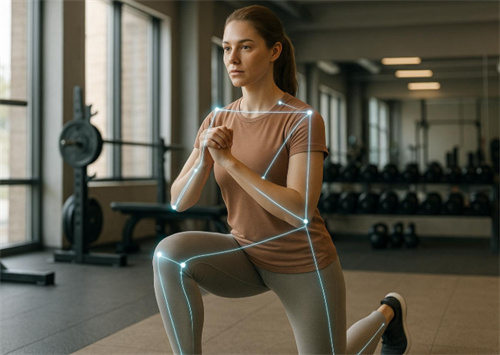
The picture is from Healify , the copyright belongs to the original author
Technology is transforming every aspect of fitness—from how we track our progress to how we train our bodies. One of the most revolutionary breakthroughs in recent years is AI visual recognition, a technology that allows artificial intelligence to “see” human movements through cameras and sensors. Today, this capability enables AI-powered systems to analyze exercise form in real time, detect mistakes, and guide users toward safer, more effective workouts.
1. Why Movement Accuracy Matters in Fitness
Proper movement is the foundation of every effective workout. Whether you’re performing a squat, a push-up, or a yoga pose, the precision of your form determines your results and reduces the risk of injury. Unfortunately, many people—especially those training at home—don’t have a coach watching their every move.
Even small mistakes in form can lead to long-term issues. For example:
A slight inward collapse of the knees during squats can cause joint pain over time.
Incorrect back posture during deadlifts may result in spinal strain.
Uneven arm extension in push-ups reduces strength gains.
Traditionally, correcting form required a personal trainer or physical therapist. But AI visual recognition is changing that dynamic—bringing expert-level feedback to anyone with a smartphone or webcam.
2. What Is AI Visual Recognition in Fitness?
AI visual recognition is a branch of computer vision—a field where machines interpret and understand visual input, such as photos or videos. When applied to fitness, it allows AI systems to identify human poses, track motion patterns, and compare them with ideal exercise models.
The core of this technology relies on pose estimation algorithms, which detect key points of the body—like shoulders, elbows, hips, knees, and ankles—from camera images. These points form a virtual “skeleton” that helps the AI analyze how a person moves.
For instance, when you perform a lunge in front of your phone’s camera, the AI captures your body’s motion in real time, measures angles between joints, and determines whether your knee aligns properly over your ankle or if your back remains straight. If not, it alerts you to adjust your form immediately.
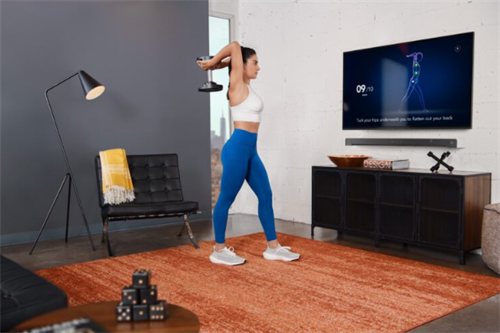
The picture is from wifihifi , the copyright belongs to the original author
3. How AI Visual Recognition Works in Real Time
Step 1: Image Capture
The process starts when your device’s camera records your movements. This can be a smartphone, laptop webcam, or even a smart mirror. The video feed is streamed to an AI model that processes the data frame by frame.
Step 2: Pose Detection and Keypoint Mapping
Using deep learning models—such as OpenPose, MediaPipe, or MoveNet—the AI identifies body landmarks in real time. These landmarks create a digital skeleton overlay, mapping your joints and limbs in motion.
Step 3: Motion Analysis and Comparison
Once your pose is mapped, the system compares it to a pre-trained library of “ideal” movements. For example, the AI might compare your squat angle (hip-to-knee alignment) against the optimal 90-degree form.
Step 4: Feedback and Correction
Finally, the AI generates instant feedback, often through voice prompts or on-screen cues. You might hear, “Straighten your back,” “Lower your hips,” or “Great posture!”—just as you would from a human trainer.
Example:
Imagine you’re doing push-ups in front of a smart camera app. As you move, the AI tracks your elbow and shoulder angles. If your elbows flare too wide, it immediately alerts you to bring them closer to your torso—helping you engage the right muscle groups and avoid strain.
4. The Advantages of AI-Powered Real-Time Correction
4.1. Accessibility and Convenience
You no longer need to book gym sessions or hire an in-person trainer. With just a camera-equipped device, AI fitness assistants bring professional feedback to your living room. Apps like Freeletics Vision or Tempo use this technology to guide users through customized workouts.
4.2. Instant Feedback and Learning
Unlike watching recorded videos or reading fitness guides, AI provides feedback as you move. This real-time correction reinforces muscle memory faster and improves body awareness. It’s like having a coach who never blinks or gets distracted.
4.3. Reduced Injury Risk
AI’s precision allows it to detect risky movements before they cause harm. For example, if your spine curves too much during a deadlift, the system can pause your session and remind you to adjust posture—something many beginners overlook.
4.4. Data-Driven Performance Tracking
AI visual recognition doesn’t just correct form—it also tracks progress over time. It measures movement efficiency, symmetry, and range of motion. Over weeks or months, it can show how your flexibility or strength has improved.
5. Real-World Applications and Examples
5.1. Smart Mirrors and Home Gyms
Devices like Mirror, Tempo Studio, and Tonal integrate cameras and AI software to create immersive training experiences. When you perform exercises in front of these smart screens, the AI visually analyzes your form and provides real-time feedback.
For example, Tempo Studio uses 3D sensors to map body movements and track your lifting form. If you perform a shoulder press too quickly or unevenly, it prompts you to slow down and adjust your grip.
5.2. Mobile Fitness Apps
Mobile-based platforms like Fitbod, Kaia Health, and Freeletics Vision use computer vision to turn your smartphone into a digital trainer. You can prop your phone on a table, start your workout, and receive instant posture corrections without additional equipment.
For instance, Kaia Health, which focuses on physical therapy and back pain relief, uses AI visual recognition to guide users through therapeutic exercises and ensure proper alignment. It has been shown to significantly improve rehabilitation outcomes.
5.3. Sports Training and Professional Coaching
Athletes and coaches use AI systems to analyze high-speed movements—like a golfer’s swing, a sprinter’s stride, or a tennis player’s serve. By identifying subtle inefficiencies in motion, AI helps athletes enhance performance with precision data.
For example, the HomeCourt app uses AI to evaluate basketball shooting form, measuring elbow angles, release speed, and jump height—all from a simple smartphone video.
5.4. Gym and Studio Integration
Commercial gyms are starting to integrate AI-driven motion analysis into their equipment. Cameras mounted on treadmills or resistance machines capture movement metrics, automatically adjusting resistance or incline to match the user’s form and fatigue level.
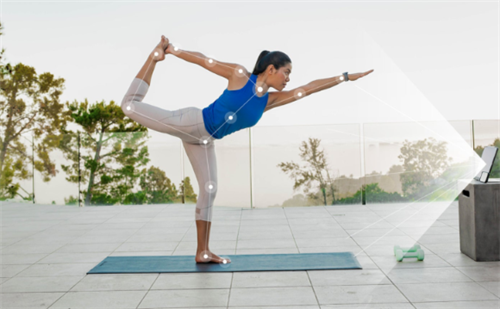
The picture is from wifihifi , the copyright belongs to the original author
6. How AI Visual Recognition Learns to Correct You?
Behind the scenes, AI visual recognition relies on machine learning models trained on thousands of hours of human motion data. These models learn what “good” and “bad” form looks like across diverse body types, angles, and lighting conditions.
For example:
The AI learns that in a proper squat, the knees should not extend beyond the toes, and the spine should remain neutral.
It understands that in a plank, the shoulders, hips, and heels should align in a straight line.
By comparing your movements to these learned standards, the AI identifies deviations and classifies them as errors. Over time, the system gets smarter by learning from more data—improving accuracy across various exercises and individuals.
7. Integration with Other Fitness Technologies
AI visual recognition works best when combined with other technologies to provide a holistic fitness experience.
7.1. Wearable Devices
Wearables like smartwatches and fitness bands measure metrics such as heart rate, calories burned, and motion intensity. When paired with AI vision, the system gains both external visual data and internal physiological data, offering a 360° view of your workout performance.
For example, if your smartwatch detects a heart rate spike while your AI coach notices improper posture, it might recommend lowering intensity or taking a rest.
7.2. Virtual and Augmented Reality (VR/AR)
Some emerging systems use AR overlays to enhance visual feedback. Imagine seeing a ghost-like outline of your “ideal” form projected on your screen, showing exactly how to align your body. This gamified feedback can make workouts more interactive and motivating.
7.3. Cloud-Based Coaching Platforms
AI vision can transmit workout data to cloud platforms, allowing human trainers to monitor clients remotely. This hybrid model combines AI’s real-time detection with a professional’s personalized insights—bridging the gap between automation and human expertise.
AI visual recognition is redefining how people train, blending technology and human movement into a seamless feedback loop. With its ability to capture, analyze, and correct fitness movements in real time, it’s like having a 24/7 personal trainer—accurate, patient, and endlessly adaptive.
In a world where time is limited and fitness goals are personal, AI visual recognition makes expert-level guidance accessible to everyone. With just a camera and the power of artificial intelligence, your workout becomes not just smarter—but safer, more efficient, and truly personal.
