Recommended





The picture is from Huntington Orthopedics , the copyright belongs to the original author
Have you ever experienced moments during training when you couldn’t seem to “activate” a specific muscle group? Even though you completed the movement correctly under your trainer’s guidance—moving the weight from point A to point B—you still didn’t feel the target muscle working as expected. Or perhaps, toward the end of a set, your form started to break down and your control weakened? These are all signs that your body is engaging in what we call “muscle compensation.”
What Is Muscle Compensation?
Muscle compensation can be understood as a kind of “muscle substitution.” It occurs when a primary muscle that’s supposed to perform a specific action fails to do its job effectively, forcing other muscles to take over and compensate for the loss of function1.
How to Differentiate Between Momentum and Compensation?
A simple way to distinguish the two: when training a target muscle, using momentum helps you complete the movement while still stimulating that target muscle—leading to soreness or fatigue in the right area afterward. Compensation, on the other hand, means the effort intended for the target muscle has shifted to other muscle groups, leaving the target area underworked while other parts feel sore or strained.
It’s important to note that using momentum properly requires skill. Many people unconsciously rely on it before their target muscles are fully engaged. Therefore, unless you’re an experienced trainee, it’s best to avoid intentionally using momentum to prevent reduced training effectiveness or potential injury.
Two Types of Muscle Compensation:
Synergistic Compensation – When the primary muscle becomes weak due to poor movement habits, synergistic (assisting) muscles are forced to take over and perform the action.
Unrelated Muscle Compensation – For example, during a lat pulldown, if your lat muscles are too weak, you might unconsciously shrug your shoulders and engage the trapezius instead.

The picture is from Reframe , the copyright belongs to the original author
Why Does Muscle Compensation Occur?
1. Lack of Stability
Stability is the foundation of all movement. Without it, your body cannot maintain proper posture, forcing other muscles to compensate. This is why trainers often emphasize cues like “tighten your core” or “keep your back straight”—these simple-sounding adjustments actually enhance stability, improve target muscle activation, and prevent compensation.
2. Excessive Load
Using too much weight is one of the most common causes of compensation. While heavier loads can increase muscle stimulation, going beyond your current capability shifts the effort to unintended muscle groups—like the thighs or lower back—and raises the risk of injury. When increasing load, always progress gradually instead of making sudden large jumps.
3. Poor Range of Motion or Form
Even with an appropriate load, incorrect form prevents you from effectively engaging the target muscle and instead activates others. Many gym-goers overlook small technical details, reducing the overall effectiveness of their workout. Mastering every aspect of a movement is key to efficient, targeted training.
4. Repetitive Movements
Repetitive movements, overuse, or minor injuries can alter muscle elasticity and structure. Repeating the same pattern frequently can cause localized fatigue, strength imbalance, and dysfunctional movement patterns. Poor posture and a sedentary lifestyle further worsen this issue, leading to muscle degradation and joint dysfunction.
A lack of variety in exercise routines can cause some muscles to overwork while others remain underused—creating imbalances that encourage compensatory behavior.
5. Injury-Induced Compensation
Acute injuries directly affect muscle and joint function. When pain persists, the body unconsciously develops compensatory patterns to avoid discomfort or movement restriction. These temporary adjustments may relieve pain in the short term, but over time, they cause overuse, fatigue, and imbalances in other areas—potentially resulting in new injuries.
The Dangers of Muscle Compensation:
When one muscle group underperforms, the body often shifts the workload to joints or bones. While this allows temporary completion of a movement, long-term compensation increases the strain on joints and bones, potentially causing chronic pain and injury.
1. Cervical (Neck) Compensation
During bicep exercises, if the upper arm or shoulder girdle lacks stability, the neck may bear extra tension. The trapezius compensates to stabilize the movement, overloading the cervical spine. Prolonged tension leads to neck stiffness, pain, and limited mobility, increasing the risk of cervical injury.
2. Thoracic (Upper Back) Compensation
Poor posture—such as slouching or forward head posture—reduces thoracic mobility. When the thoracic spine becomes stiff, the lower cervical spine and scapulothoracic joint must compensate, which may cause a rounded upper back (“hunchback”) or a fatty hump (“dowager’s hump”). This disrupts spinal alignment and contributes to chronic neck, shoulder, and back discomfort.
3. Lumbar (Lower Back) Compensation
Prolonged sitting or weak gluteal muscles often lead to lower back compensation. When the glutes fail to activate properly, lumbar muscles take over, placing extra stress on the lower spine. Over time, this can result in lower back pain, anterior pelvic tilt, or even herniated discs. The altered movement pattern can also affect the knees and ankles, creating a chain reaction of injuries.
4. Knee Compensation
Limited hip external rotation often causes the knees to collapse inward. This “small joint compensating for a large joint” pattern forces the knees to bear excessive pressure. Persistent misalignment or forced knee stabilization increases the risk of hyperextension, pain, and degenerative joint conditions such as arthritis.
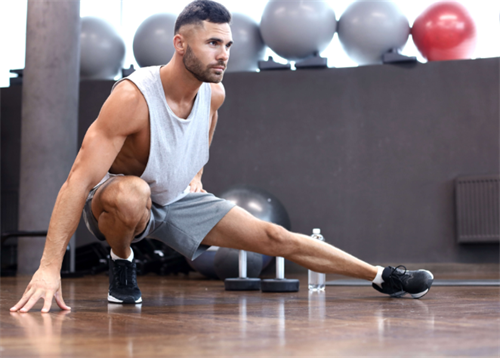
The picture is from Zing Coach , the copyright belongs to the original author
How to Reduce Muscle Compensation?
1. Strengthen Spinal Stability and Mobility
The cervical, thoracic, and lumbar regions collectively form the spine—the body’s core stabilizer and force transmission center. Enhancing spinal flexibility and stability helps improve balance and reduce compensation.
Recommended exercises:
Namaste Stretch – Promotes spinal elongation and posture alignment.
Cat Stretch & Cat Arch – Improves spinal mobility and neuromuscular control.
2. Strengthen the Back, Core, and Glutes
Joint stability alone is not enough—muscles must provide adequate support and contraction strength. Strengthening the posterior chain and core helps maintain proper movement patterns and reduce joint stress.
-Back training:
Cobra Pose – Activates spinal extensors and enhances spinal support.
-Core training:
Leg Raise;
Boat Pose;
Builds core strength and overall stability.
-Glute training:
Chair Pose;
Plank;
Activates glute muscles and the lower limb stability chain, reducing lumbar and knee compensation.
Knee alignment practice:
Keep the knees aligned with the toes during movement to strengthen lower-limb stability and prevent inward collapse or hyperextension.
3. Coordinate Movement with Breathing
Proper breathing enhances awareness and reduces compensation risk. Deep, steady breaths relax tight muscles and improve body-mind connection.
Tips:
Maintain slow, steady breaths—especially exhaling to release tension.
Focus attention on distal body parts (e.g., fingertips, toes) during movement to enhance neuromuscular connection and training precision.
4. Progress Gradually and Respect Your Body’s Rhythm
The key to avoiding compensation is progressive training. Exercise should follow the principle of “gentle progression”—avoid forcing difficult movements or chasing outward form. Focus instead on internal feedback and proper control.
Practical advice:
In the early stages, prioritize building control and stability before pursuing complex or heavy movements.
Gradually increase intensity and duration within a safe range to help your body adapt naturally and develop healthy movement patterns.
If you’re a beginner, don’t rush to “feel” a specific muscle right away. Instead, focus on consistent practice and correct form. For newcomers, accumulating proper training volume is more valuable than chasing instant results. Over time, the lessons learned from early challenges—like compensation and lack of activation—will help you refine your technique and master better muscle control in future training.
[Disclaimer: The content of this article is for fitness and health reference only and does not constitute medical advice. Please consult a qualified physician or certified trainer before starting any exercise or nutrition program.]
Reference:
1. https://www.reboundsportspt.com/muscle-compensation/
