Recommended




The picture is from SENTISIGHT.AI , the copyright belongs to the original author
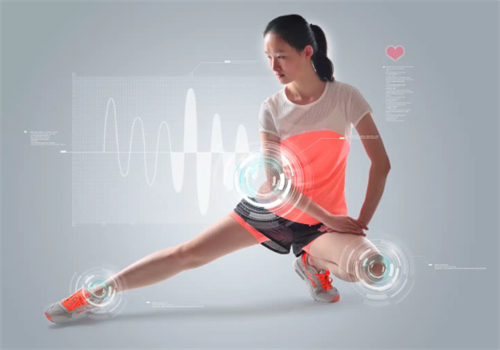
Injuries are the silent nemesis of fitness progress. A wrong movement or an inappropriate training time can cause your fitness progress to regress for several weeks or even months. Artificial Intelligence (AI) combined with data from wearable devices, motion sensors, and biometric technologies is making early injury prediction a reality. AI systems are now capable of detecting subtle patterns in movement performance, fatigue, and the recovery process. Even highly trained experts may overlook these patterns, and the AI system can issue a "red alert" before your body has a problem.
1. The Rising Need for Predictive Injury Prevention
Injury prevention has always been reactive. You feel pain, stop training, seek treatment, and then recover. However, in most cases, the damage has already been done. According to sports medicine research, over 50% of training-related injuries are preventable if warning signs are detected early. The challenge lies in spotting those signals.
Modern athletes are already overloaded with data—heart rate, pace, sleep, calories, step count—but interpreting what that data means for injury risk is complex. That’s where AI comes in.
AI systems don’t just collect numbers; they understand patterns. They can detect when small deviations in your biomechanics or recovery metrics suggest that you’re entering the “danger zone.”
The result: a personalized early warning system that could revolutionize sports safety.
2. How AI Detects Injury Risk: The Science Behind the “Red Alert”
AI injury prediction models rely on machine learning—a process where algorithms learn from vast amounts of data to recognize patterns and forecast outcomes. Let’s break down how this works in the context of injury prevention.
a. Data Collection
AI draws information from multiple sources:
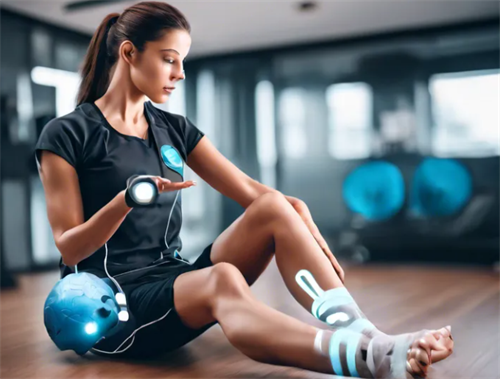
Wearable sensors: Devices like Garmin, Whoop, and Oura capture heart rate variability (HRV), movement, sleep quality, and recovery.
Motion analysis: Smart cameras or pressure-sensitive insoles analyze stride length, joint angles, and symmetry.
Training logs: AI reviews past performance data—sets, reps, mileage, intensity, and rest periods.
Biometric markers: Some systems include muscle oxygen levels, body temperature, or hormonal changes.
b. Pattern Recognition
Over time, the AI learns what “normal” looks like for you. It builds a baseline of your physical and physiological behavior—your ideal training rhythm, recovery patterns, and even how your body reacts to stress.
When you deviate from that baseline—say, reduced sleep, slower recovery, or asymmetrical movement—the AI flags it as a potential risk factor. A combination of multiple deviations can trigger a “red alert”, warning you that your injury risk is climbing.
c. Predictive Modeling
Advanced algorithms use predictive analytics to forecast outcomes up to 48 hours ahead. This prediction window gives athletes time to adjust—by lowering intensity, increasing rest, or focusing on mobility—before a potential injury occurs.

The picture is from lonestarpain , the copyright belongs to the original author
3. The Subtle Warning Signs Humans Miss—but AI Doesn’t
Human intuition is powerful, but it’s also limited by perception and bias. You might ignore mild fatigue or dismiss a tight hamstring as “just soreness.” AI, however, spots patterns invisible to the naked eye.
Here are a few examples:
Example 1: The Runner’s Gait Shift
Over two weeks, an AI platform detects a 3% change in left-right stride balance for a marathon runner. While imperceptible to the runner, this asymmetry often precedes knee pain. The AI issues a “red alert,” prompting the athlete to visit a physiotherapist—preventing a likely overuse injury.
Example 2: The Strength Trainer’s Recovery Lag
A weightlifter’s wearable shows declining HRV and slightly elevated resting heart rate, even though training intensity hasn’t changed. The AI recognizes this as cumulative fatigue and signals a 48-hour “risk zone.” Taking an unscheduled rest day avoids a potential muscle strain.
Example 3: The Soccer Player’s Fatigue Pattern
During a congested match schedule, an AI system notes decreased sprint acceleration and reduced sleep quality. It advises lighter drills and additional hydration. The player stays injury-free, while teammates who ignore similar signs suffer muscle pulls.
These examples show how AI transforms invisible signals into actionable insights.
4. The Data That Fuels AI’s Injury Forecasts
AI relies on data quality as much as quantity. The more precise and personalized the data, the better the prediction.
By combining these variables, AI can detect complex relationships. For instance, if your sleep decreases and HRV drops while training load increases, the system might predict a 70% likelihood of soft-tissue strain within 48 hours.
5. How the “Red Alert” Works in Practice
When the AI system detects that your injury risk exceeds a certain threshold, it issues a “red alert.” Here’s what typically happens:
Notification: You receive a warning through your wearable or fitness app.
Explanation: The AI identifies the top three contributing factors—for example, poor sleep, reduced HRV, and rising training load.
Recommendation: The system suggests actions like a rest day, active recovery, mobility work, or hydration protocol.
Follow-Up Monitoring: The AI continues tracking your metrics to confirm that risk levels are declining.
This process transforms AI from a passive tracker into an active guardian of your well-being.
6. Real-World Applications and Case Studies
a. Elite Sports
Professional teams increasingly rely on AI for injury forecasting.
For instance, in the English Premier League, some clubs use AI-driven analytics to track player load, fatigue, and sleep. One study found that predictive AI reduced soft-tissue injuries by nearly 40% in a single season.
b. Workplace Fitness and Military Training
In high-demand environments like the military or emergency services, fatigue-related injuries are common. AI systems now monitor soldiers’ physical data to issue alerts before training accidents occur.
c. Everyday Fitness Users
Consumer wearables are catching up too. Platforms like Whoop and Garmin are integrating “strain vs. recovery” insights. While they don’t yet issue literal 48-hour red alerts, they already warn users when recovery is inadequate—paving the way for fully predictive injury systems.
The picture is from Quickie News , the copyright belongs to the original author
7. Benefits Beyond Injury Prevention
While injury prediction is the headline feature, AI’s impact goes deeper.
Enhanced Longevity: By avoiding overtraining, you extend your athletic life span.
Better Adaptation: AI helps balance effort and rest, leading to consistent progress.
Emotional Well-Being: Knowing that your system monitors risks can reduce anxiety and improve confidence.
Personalization: Each user’s prediction model evolves with time, creating a training plan truly unique to their physiology.
This personalized intelligence is a leap forward from one-size-fits-all fitness advice.
8. The Limits and Ethical Challenges
Despite its potential, AI-driven injury prevention is not without challenges.
a. Data Accuracy
AI is only as reliable as its sensors. A poorly fitted wearable or inconsistent data logging can skew predictions. Continuous calibration is key.
b. Privacy Concerns
Biometric data is highly sensitive. Fitness platforms must maintain transparent policies on how user data is stored, shared, and secured.
c. Human Oversight
AI should assist, not replace, human judgment. A coach, physiotherapist, or athlete should always interpret AI alerts within the broader training context.
d. Psychological Dependency
There’s also a risk of over-reliance—some athletes may become anxious about every small alert. Education about normal fluctuations is essential to prevent unnecessary worry.
AI’s ability to issue a “red alert” 48 hours before an injury represents a paradigm shift in fitness and sports science. It bridges the gap between knowing and feeling, between data and intuition.
Instead of waiting for pain to dictate rest, you can train proactively—guided by intelligent systems that read the silent language of your body. The next time you lace up your shoes or step into the gym, your AI companion might already know what your muscles, joints, and nerves are about to tell you.
