Recommended




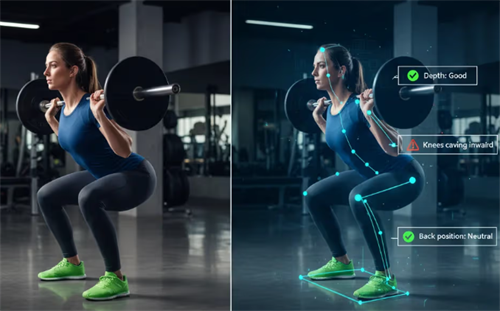
The picture is from Scott Alan Turnery , the copyright belongs to the original author
You’ve just finished a set of squats. You feel good, strong. You open your AI fitness app for your post-set form analysis. The first AI coach, let's call it "StrictForm AI," pops up: "Analysis Complete. Depth is insufficient. Hips are rising faster than your torso, causing a 'good morning' squat. Increase ankle mobility and focus on driving your chest up."
You decide to run the same video through a second, highly-rated app, "FluidMotion Coach." Its verdict appears: "Great effort! Depth is acceptable for your body proportions. The hip-to-torso timing is within a functional range of motion. Maintain your current form."
Confusion sets in. One says you’re doing it wrong; the other says you’re fine. They can’t both be right. So, in an age where algorithmic advice is readily available, how do you, the lifter, become the final arbiter of your own movement? Whose advice should you follow?
The answer isn't to blindly trust one AI over the other, but to become an intelligent interpreter of the data they provide. The key lies in understanding why the disagreement exists and using a human-centric framework to resolve it.
The "Why" Behind the Disagreement: A Peek Inside the Algorithmic Black Box
Before you can decide, you need to understand the potential sources of the conflict. AIs aren't omniscient oracles; they are sophisticated pattern-matching systems with specific limitations.
1. Differing Training Philosophies and Data Sets
An AI is only as good as the data it was trained on. "StrictForm AI" might have been trained exclusively on videos of elite powerlifters hitting precise, competition-standard depth (hip crease below the knee). Its entire worldview is built on this gold standard. "FluidMotion Coach," however, might have been trained on a broader dataset including recreational athletes, CrossFit participants, and individuals with varying body types and mobility limitations. Its definition of "acceptable" is therefore more flexible. It’s like asking a classical ballet master and a contemporary dance instructor to critique the same freestyle dance move—their standards and frameworks differ.
2. Varied Risk Thresholds
One AI might be programmed with a hyper-conservative, safety-first model. It flags any deviation from a textbook-perfect bar path as a potential spinal shear force risk. Another might have a higher tolerance for what it deems "non-injurious" movement, recognizing that minor form breakdown under fatigue is normal for experienced lifters. The first is a paranoid safety inspector; the second is a pragmatic coach.
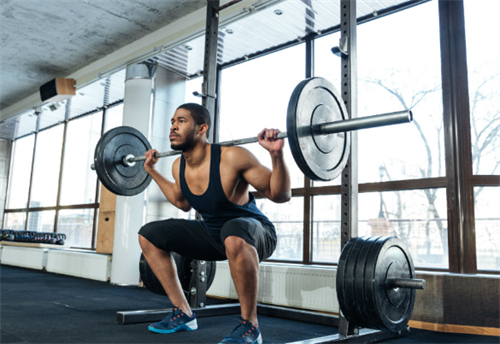
Technical Limitations and Camera Angle: The quality of the analysis is utterly dependent on the quality of the input. A video shot from a low, side-angle is ideal for assessing depth and bar path. A video shot from a weird, head-on angle in poor lighting is a recipe for a faulty analysis. One AI might be better at compensating for a suboptimal angle, while the other fails entirely. The old programming adage "garbage in, garbage out" very much applies.
The picture is from The Chia Co , the copyright belongs to the original author
Your Decision-Making Framework: The 5-Step Human Filter
Armed with an understanding of why AIs disagree, you can now apply a critical framework to filter their advice. You are the CEO of your fitness journey, and the AIs are your conflicting department heads. It's your job to synthesize their reports and make the final call.
Step 1: Conduct a Self-Assessment – The "How Does It Feel?" Check
This is your most powerful tool. Before looking at any AI feedback, tune into your own body.
Did the squat feel strong and stable? Or did you feel a tweak in your lower back or knees?
Where did you feel the effort? Was it primarily in your glutes and quads (good), or did your lower back take over (a sign of the "good morning" squat that StrictForm AI flagged)?
Was the movement smooth? Or was there a noticeable "sticking point" or grind?
Example: Let's go back to our original conflict. StrictForm AI says your hips are rising too fast. When you replay the set in your mind, did you feel your torso straining to stay upright, with a lot of pressure in your lower back? If yes, StrictForm AI has likely identified a real issue, even if FluidMotion Coach is being lenient. Your body is confirming the data.
Step 2: Define Your Training Goal
Your goal dictates which AI's advice might be more relevant.
Goal: Powerlifting Competition. You need to hit depth reliably. In this case, "StrictForm AI's" critique is non-negotiable. You must prioritize its feedback because the standard it's judging you against is the standard you will be judged on in competition.
Goal: General Strength and Muscle Building. "FluidMotion Coach's" more permissive advice might be sufficient, as long as your self-assessment doesn't reveal pain. However, the "good morning" squat pattern identified by StrictForm AI is still inefficient—it shifts work from your powerful quads and glutes to your smaller spinal erectors. For long-term progress and safety, addressing it is wise.
Goal: Working Around an Old Injury. Perhaps you have a previous ankle injury that limits your dorsiflexion, preventing you from hitting powerlifting depth without your heels lifting. "FluidMotion Coach" might be recognizing your individual constraints, while "StrictForm AI" is just telling you something you physically cannot do without external help (e.g., weightlifting shoes or heel elevators).
Step 3: Seek Corroborating Evidence – The "Second Opinion"
When the AIs conflict, don't just stop at two digital opinions.
Film Yourself: This is crucial. Watch your own video alongside the AI's analysis. Can you see what "StrictForm AI" is talking about? Pause the video at the bottom of your squat. Can you clearly see your hip crease is above your knee? The evidence is right there.
Use a Trusted Human Resource (The "Known Good" Model): Compare your video to a reputable source. Pull up a squat tutorial from a universally respected coach like Dr. Aaron Horschig (Squat University) or Ed Coan. Compare your form, frame-by-frame, to their demonstrations. Does your form breakdown resemble the "what not to do" example they are showing? This often provides the clearest answer.
Step 4: Prioritize Safety-Critical Feedback
Some form cues are more important than others. Create a mental hierarchy of feedback.
High-Priority (Address Immediately): Feedback related to spinal rounding (particularly the lower back), valgus knee collapse (knees caving in), or any analysis that correlates with a sharp pain. If one AI flags significant spinal flexion and the other doesn't, err dramatically on the side of caution and trust the one warning of risk.
Medium-Priority (Address for Efficiency): This includes the "hips rising fast" issue, slight forward lean, or less-than-competition depth. These won't necessarily cause an immediate injury but can limit performance and lead to long-term wear and tear.
Low-Priority (Fine-Tuning): Minor details like grip width or slight asymmetries that don't cause pain or power leaks.
In our example, the "good morning" squat pattern is a medium-priority issue. It's not an emergency, but fixing it will make you stronger and safer.
Step 5: Embrace the Hybrid Approach – The "Test and Re-Test" Method
You don't have to fully accept or reject one AI's advice. You can test their hypotheses.
The Experiment: For your next squat session, dedicate your warm-up sets to actively implementing "StrictForm AI's" cue: "drive your chest up." Use a lighter weight and focus intensely on keeping your torso more upright as you ascend.
The Result: Does the movement feel smoother? Do your glutes feel more activated? Does the minor low-back tension you felt before disappear?
The Analysis: If the answer is yes, then you've validated StrictForm AI's advice through practical application. It provided a useful cue that improved your movement quality. If the new cue feels awkward and makes you weaker, perhaps the issue is less pronounced than the AI thought, or you need a different cue altogether. You've now gathered your own data.
The picture is from Freepik , the copyright belongs to the original author
AI fitness coaches are incredible tools, providing instant, data-driven feedback that was once available only to elite athletes. However, they are tools, not replacements for your own intelligence and bodily awareness. A conflicting evaluation is not a failure of technology; it's an invitation for you to engage more deeply with your own training.
When two AIs give opposite advice, don't outsource your decision. Use the conflict as a starting point for investigation. Listen to your body's feedback, clarify your personal goals, seek visual evidence, prioritize safety, and test the corrections in the real-world laboratory of the gym.
