Recommended




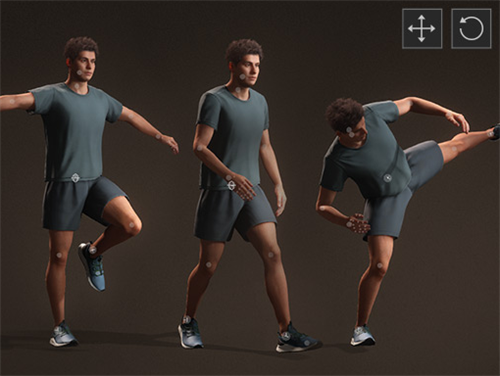
The picture is from Reallusion , the copyright belongs to the original author
In the era of intelligent fitness and immersive technology, the idea of creating a virtual body model—a digital twin of yourself that can move, react, and improve alongside you—is becoming a powerful reality. Thanks to advancements in artificial intelligence (AI), 3D modeling, and motion capture, we are now able to generate lifelike digital representations of the human body for personalized training, biomechanical analysis, and real-time simulation.
1. What Is a Virtual Body Model?
A virtual body model is a computer-generated 3D representation of an individual’s physique, built using real-world data such as body measurements, motion patterns, and even muscle activity. Unlike traditional avatars in gaming or VR, AI-powered body models are dynamic and adaptive—they continuously update based on new information from sensors, cameras, or wearable devices.
For example, imagine a fitness trainee performing squats in front of a smart mirror. The system captures their movements, analyzes joint angles, and adjusts the virtual body model in real time. Over time, it learns the person’s biomechanics, highlighting muscle imbalances or inefficient movement patterns. The result is a hyper-personalized digital twin that mirrors not only appearance but also motion accuracy and physical limitations.
2. How AI Creates a Virtual Body Model?
Building a virtual body model requires integrating several key technologies—computer vision, deep learning, biomechanics modeling, and simulation physics. Here’s how the process unfolds:
Step 1: Capturing Body Data
The foundation of a virtual body model lies in accurate data collection. AI uses a combination of sources to map your body’s structure and movement:
-3D Scanning: Advanced scanners or smartphone apps capture detailed body geometry, generating a point cloud or mesh model of the user’s physique.
-Computer Vision Cameras: AI-driven systems analyze video input to estimate joint positions and body posture using pose estimation algorithms (like OpenPose or MediaPipe).
-Wearable Sensors: Smartwatches, motion trackers, and EMG sensors collect real-time data on motion dynamics, muscle activation, and heart rate.
-Depth and Infrared Cameras: Used in tools like Microsoft Kinect or smart mirrors, these sensors add depth perception, enabling precise tracking of body orientation in space.
Step 2: Building the 3D Body Structure
Once data is collected, AI reconstructs a three-dimensional skeletal and muscular model. Deep neural networks trained on thousands of body shapes predict realistic proportions and muscle distribution.
This process involves:
-Skeleton Estimation: Identifying 20–30 major joints and bones to create a biomechanical “skeleton.”
-Muscle Layer Simulation: Using machine learning to infer muscle size, tension, and fatigue patterns from motion data.
-Skin and Surface Modeling: Rendering a realistic outer layer that visually matches the user’s body texture and contours.
Some platforms also apply GANs (Generative Adversarial Networks) to fill in missing data or refine visual realism, generating human-like motion without requiring expensive equipment.
Step 3: Calibrating Motion and Physics
To make the model move naturally, AI integrates physics simulation engines and motion-capture data. This ensures that every jump, squat, or stretch follows biomechanically accurate patterns.
For example, when an athlete performs a high kick, the system calculates torque, balance, and momentum in real time. Over time, reinforcement learning algorithms help the AI model understand what “efficient” movement looks like—allowing it to give feedback or adjust training simulations dynamically.
Step 4: Personalization and Continuous Learning
The real magic happens through continuous adaptation. AI continuously refines your virtual body model as you train. It recognizes subtle changes—such as improved posture, increased muscle tone, or shifts in body fat percentage—and updates the model accordingly.
This makes your digital twin an evolving mirror of your physical state, capable of predicting injury risks, tracking progress, or suggesting optimized workout plans.
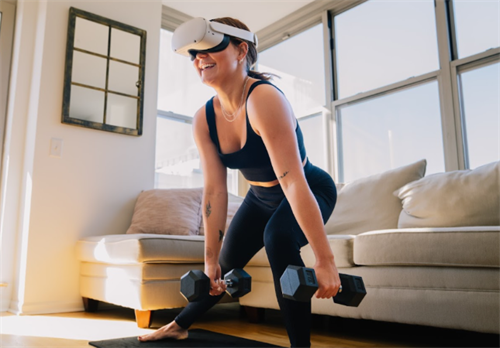
The picture is from Litesport , the copyright belongs to the original author
3. The Core AI Technologies Involved
Creating a virtual body model isn’t just about 3D graphics—it’s a symphony of AI disciplines working together:
-Computer Vision: Extracts posture, gestures, and motion patterns from video or image data.
-Deep Neural Networks: Learn human movement dynamics and predict how muscles and joints interact.
-Natural Language Processing (NLP): Allows users to interact with their virtual coach or model via voice commands (“Show my squat form improvement over time”).
-Reinforcement Learning: Enables the model to “learn” ideal movement forms by simulating and optimizing performance outcomes.
-Biomechanical Modeling: Translates physics and anatomy principles into computational models to simulate real-world constraints like gravity, friction, and inertia.
4. Applications in Fitness and Training
AI-generated virtual body models are reshaping the entire fitness ecosystem—from personal training and sports analytics to rehabilitation.
1) Real-Time Motion Correction
When paired with smart cameras or mirrors, the virtual model detects deviations from ideal posture. For instance, if a user’s knees cave inward during a squat, the system immediately highlights the issue on the 3D avatar and provides guidance for correction. This creates a feedback loop once only possible with a live coach.
2) Personalized Workout Simulations
AI can simulate how your body will respond to specific exercises or loads. Before you even pick up a weight, your virtual model can estimate strain levels on joints and predict fatigue zones. For example, runners can visualize the stress distribution on their knees when adjusting stride length or footwear type.
3) Injury Prevention and Rehabilitation
For physical therapy, virtual body models help track range of motion and symmetry in recovery exercises. AI compares your current movement patterns with healthy baselines, alerting you if certain motions may risk re-injury. This remote guidance can complement professional physiotherapy sessions.
4) Sports Performance Optimization
Elite athletes use virtual body models to fine-tune their biomechanics. In baseball, pitchers analyze shoulder rotation to prevent strain; in golf, AI simulations reveal the optimal swing trajectory; and in swimming, digital twins can visualize fluid resistance in real time.
5) Virtual Fitness Coaching
Platforms like Mirror, Tonal, or FitXR already use motion tracking and AI feedback. The next step is a personalized digital coach that not only shows your form but also embodies your virtual model—offering data-driven feedback and encouragement in immersive 3D environments.
5. Beyond Fitness: Wider Applications
While fitness is the most visible use case, AI-generated virtual body models have broader implications:
-Medical Training: Doctors can practice procedures on realistic body simulations adapted to individual anatomy.
-Apparel Design: Virtual try-ons use digital body models to predict how clothing fits different body types.
-Gaming and VR: Motion-matched avatars enhance realism and self-presence in virtual environments.
-Ergonomic Design: Companies simulate worker posture and fatigue under different conditions to improve workplace safety.
The picture is from Freepik , the copyright belongs to the original author
6. Real-World Examples
Example 1: ZOZOSUIT and Body Scanning
Japanese company ZOZO developed a smart bodysuit with printed sensors that capture body dimensions via smartphone camera. The collected data feeds into a virtual model for precise clothing fit—an early demonstration of how AI and scanning create personal digital twins.
Example 2: AI Motion Lab for Athletes
Several sports labs now use deep learning–based motion capture systems without markers. Cameras analyze athletes’ movements and automatically build biomechanical models that help coaches adjust form, optimize efficiency, and reduce injury risk.
Example 3: Smart Mirrors with Real-Time Feedback
AI-powered fitness mirrors like Tempo and Fiture integrate 3D sensors to project a digital twin of the user. The system visualizes movement accuracy, compares it with optimal patterns, and provides corrections—effectively merging personal training with AI visualization.
The next evolution of virtual body models will likely merge AI, augmented reality (AR), and wearable technology into seamless ecosystems. Imagine wearing lightweight sensors that instantly render your digital twin on an AR display during a workout. You’ll see your muscle engagement, balance, and energy expenditure in real time, guided by a smart AI coach who adapts to your physiology and goals.
Moreover, integration with digital health records could make these models even more holistic—tracking everything from posture to sleep quality, offering a unified view of human wellness.
